Inside: There’s a decline in bird population but planting these plants will help a lot.
Have you heard many birds lately? If you’re older than a millennial you may have noticed that birdsong’s just not what it used to be. And you’d be right.
A few years ago on a long drive home I searched the radio for something interesting to listen to. I came across something very interesting indeed. It was an interview with someone about bird populations. Coming from a distant town, the radio faded out way too soon.
But what I did hear was compelling. Clearly confirming what I thought I’d noticed. The interviewee was talking about the decline of bird populations.
He described a monitoring station that had been recording birdsong in the spring, on the same date each year, at the same location over 20 years.
He played a recording from 20 years ago, 10 years ago, and the current year. The difference was staggering. The early years were robust with chirps, twitters, and screeches.
The current year was virtually devoid of song.
There are far fewer birds now for several reasons. But there’s one thing we each can do to significantly fix the problem.
Birds are in decline, and so is their food
Over the past 50 years there has been a 29% decline of birds across North America, as reported in the Sept. 19, 2019, issue of Science. That’s 2.9 billion fewer birds. This includes both threatened and populous birds.
The recent 2025 U.S. State of the Birds report reveals a continued decline of bird populations across all mainland and marine habitats. This comes after the 2019 study that documented the loss of 3 billion birds in North America over the previous 50 years. That’s 29% of birds gone since 1970. The new report shows it’s getting worse.
There are several reasons for this: habitat loss, suburban sprawl, pet and feral cats, agricultural practices, collisions with windows, buildings, cars, communications towers, and most importantly…insect loss.
Yes, insects are in decline, too, and it’s a problem
It’s the native insects here, the leaf-eating caterpillars that become butterflies and moths, the tiny buzzy insects that go about pollinating flowers that produce seeds and fruit, the insects that rove about the leaves eating the smaller insects that eat the leaves, and more. The web of insects that keep an ecosystem stable, the insects that birds need to procreate.
And this, my reader, is where we can all take some action and help turn this trend around. More on that in a bit.
How much birdsong do our children hear?
I grew up in a small New England town surrounded by woods. I remember waking up every morning to the most amazing assortment of birdsong from spring through fall. It gave me my feeling of wonder for nature, a solid awareness that I’m on a beautiful planet, abundant with life.
Now I wonder how much birdsong have our children heard? At the rate this trend is going, will our grandchildren hear any of these sounds of nature?
When children grow up with already diminished birdsong, the decline over their lives may not be so noticeable. They don’t know what has been before. This is called “generational amnesia.”
We all love to hear the songs of birds, especially in the spring when they’re most active nesting and feeding their young. But it’s not just the delightful sound of birds that we get from them…
…these little creatures deliver to the world an essential ecological service.
Birds eat bugs to feed their little nestlings. Lots of bugs. Especially in the spring.
Birds snatch up bugs to feed their babies in the spring. (Many keep eating bugs throughout the year, along with seeds and fruits.) They’ll end up eating up to 70% of the bugs. They need roughly 5,000-9,000 insects to rear a brood.
If there aren’t enough bugs the birds don’t survive. If there aren’t enough birds an insect population could explode, and not always the nicest insects to deal with. This is an ecological service birds provide: to keep insect populations in check and make the earth inhabitable. (With song, beauty, and wonder.)
We need the insects
Insects are in decline mostly due to habitat loss, agricultural practices, and loss of native foliage.
Most insects eat plants, mostly their leaves.
Insects need leaves, but not just any leaves
Through millennia insects and plants evolved together. So the insects evolved with the ability to eat only the plants they evolved with. Foliage with a specific leaf chemistry.
That means they need the foliage of native plants.
If you bring a bunch of exotic plants into an area, which is what all ornamental landscaping is, the insects can’t eat them. (Except the pest insects often can.) Which reduces the insect population. Which then reduces the bird population.
“…Insects are the little things that run the world”
E. O. Wilson, ecologist
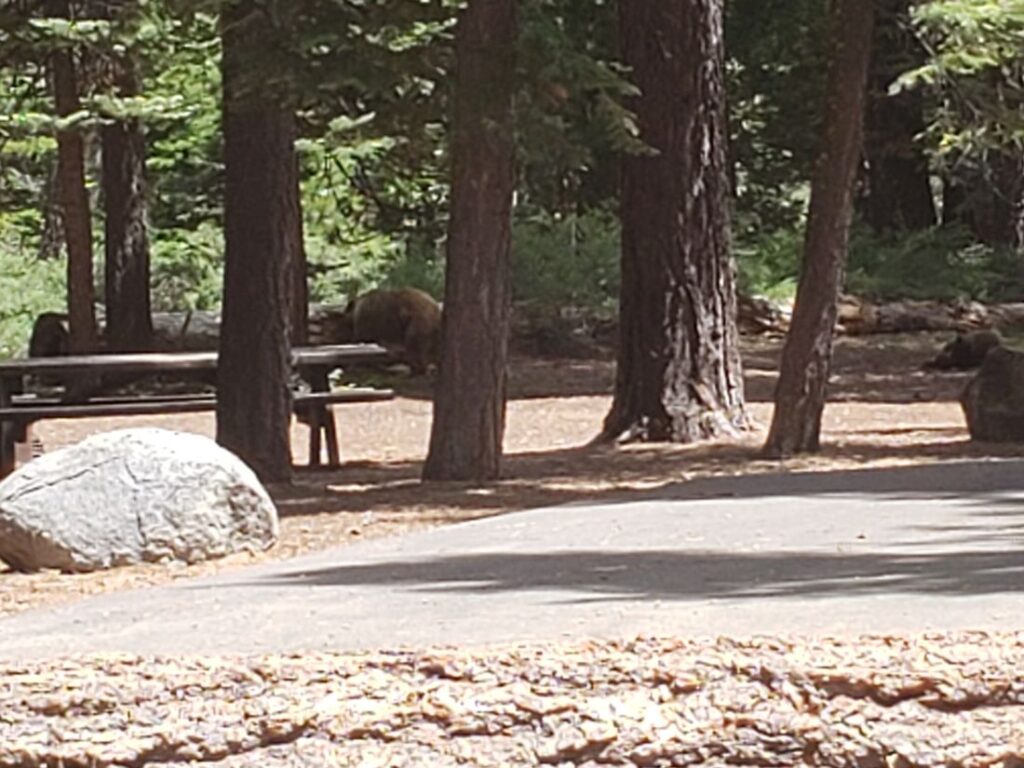
Insects turn native foliage into protein that feeds birds, lizards, toads, frogs, fish, raccoons, foxes… even bears! (I recently got to watch a bear tear through a downed log searching for insects, her two cubs frolicking nearby.)
This makes insects big players at the bottom of the food chain. And our birds depend on them.
Here’s what we can do to help the birds
Every one of us can help songbirds by planting native plants in our home landscapes.
And we can advocate for the planting of natives in commercial landscapes, too.
We need to give the insects their food to support them and the birds that live off them.
There’s a success story about the recovery of North American ducks and geese populations. Their numbers had dwindled as severely as songbirds now are.
It was hunters who raised the alarm and between Canada, the U.S., and Mexico laws were enacted to protect the native wetlands the ducks and geese needed. Private donations also helped purchase wetlands to save. Since 1970 their populations have grown by 56%.
How many natives are around you now?
If you think there are plenty of native plants all around you, take a closer look. Maybe there are lots of native trees, but what’s under them? Native understory? The understory of wild spaces, important for insects and birds, is often filled annual exotic grasses and exotic weeds—plants that came over with settlers and established themselves well here, sometimes running amok. None of these are native. No fodder for our essential insects.
And our home landscapes are filled with exotic plants that are inedible to native insects. Take a look at home landscapes around you. Are they filled with plants from other lands? These are usually plants that come from nurseries all across America. And they’re not native. Japanese maples, crape myrtles, rhododendrons, camellias, lilacs, butterfly bush, barberries? Nothing for the native insects there.
Try for 70% natives
A Smithsonian Institute study showed that in home landscapes and neighborhoods, where at least 70% of the plants are native, there’s enough fodder for insects to support a normal population of chickadees. If there’s less than 70%, broods do not survive.
So it’s become the rule of thumb to aim for your landscape plantings to be 70% native plants. This still leaves room for vegetable gardens, herbs, and our favorite flowers.
Does this all mean that your native plants would be filled with holes from insects? Plants can be nearly 15% chewed up by insects before being noticeable to us. But, I consider holes in leaves to be a badge of ecosystem service.
How to start planting natives
Finding native plants isn’t always easy. Search for your local native plant society. They will be a great source of information for you. And they’ll likely have annual plant sales. Ask for natives at your local nursery or garden center. When people start asking for things businesses respond to demand.
Consider removing some lawn and converting the space to native shrubs and perennials for caterpillars and birds, and pretty flowers for you to enjoy.
Without healthy populations of birds and insects we could lose the soil nutrient cycling insects take care of, lose the pollination services of our food plants by insects, and see populations of pesky insects get out of whack and become problems. Those are the ecosystem services birds and insects provide to the world.
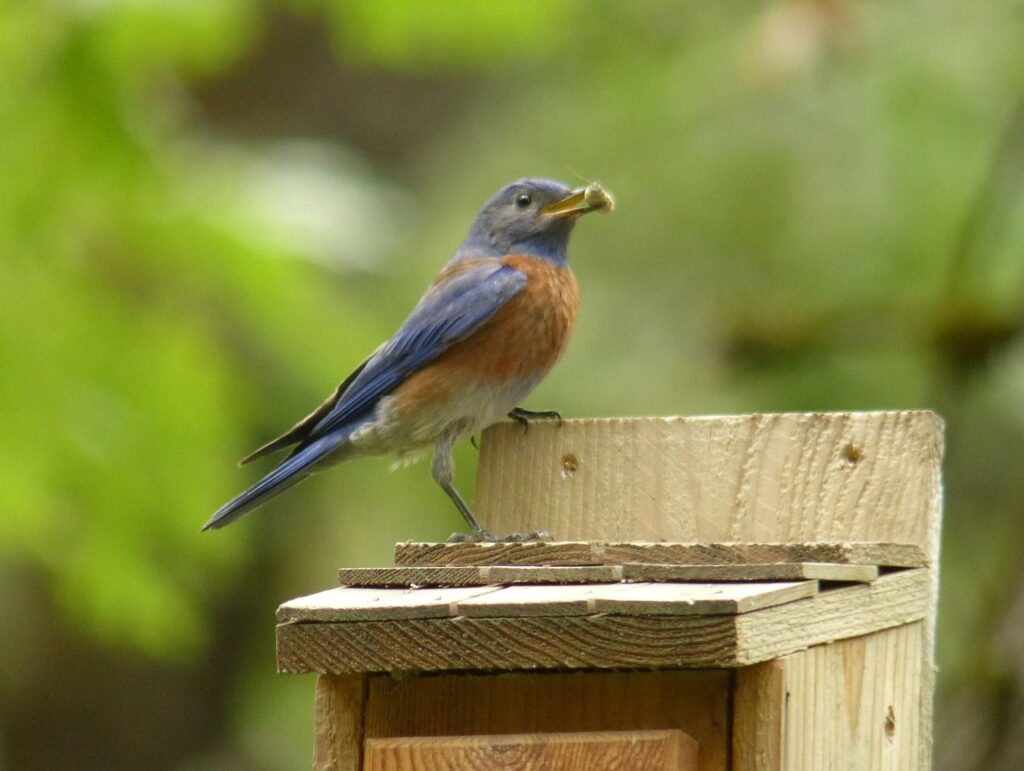
What will our children know of birds and nature?
Robust birdsong is a sign of a healthy ecosystem. Do our children know the rich, chaotic beauty of birdsong? The cheeps, tweets, and screeches of one bird calling to another and their back and forth conversation? What will our children’s children hear? What birds will they see? Shall we leave this world in a diminished state or take action to turn things around so they can delight in nature’s beauty.
I feel strongly that we leave our world in a better place than what it is now for our children and grandchildren. We’ve made a heavy impact on this earth, that cannot be denied.
And yet we have all the knowhow we need to make great repairs to preserve the natural systems that make this planet so beautiful and inhabitable.
One way to start is with the simple task of selecting plants that help our ecosystems rather than diminish them. Choose to landscape with natives. It takes 70% to save the birds.
Your grandchildren will thank you. I promise!
Sources
Bringing Nature Home: How You Can Sustain Wildlife With Native Plants, Douglas Tallamy, Timber Press, 2007. This book changed my whole view on landscaping and is the greatest source of information for this article. *
U.S. Bird Populations Continue Alarming Decline, New Report Finds
Birds Are Vanishing From North America
With Habitat Restored, Ducks in the Millions Create Fall Spectacle
Why Insect Populations are Plummeting–and Why it Matters
The Crisis for Birds is a Crisis for All
* This site is reader-supported. When you buy through one of the links, I may earn an affiliate commission. I am an Amazon affiliate.
Further Reading
We Have a Solution to Climate Change
Is Cotton Bad for the Environment?
Grow an Insectary Garden for Beneficial Insects–They’ll Provide Pest Control and Pollination
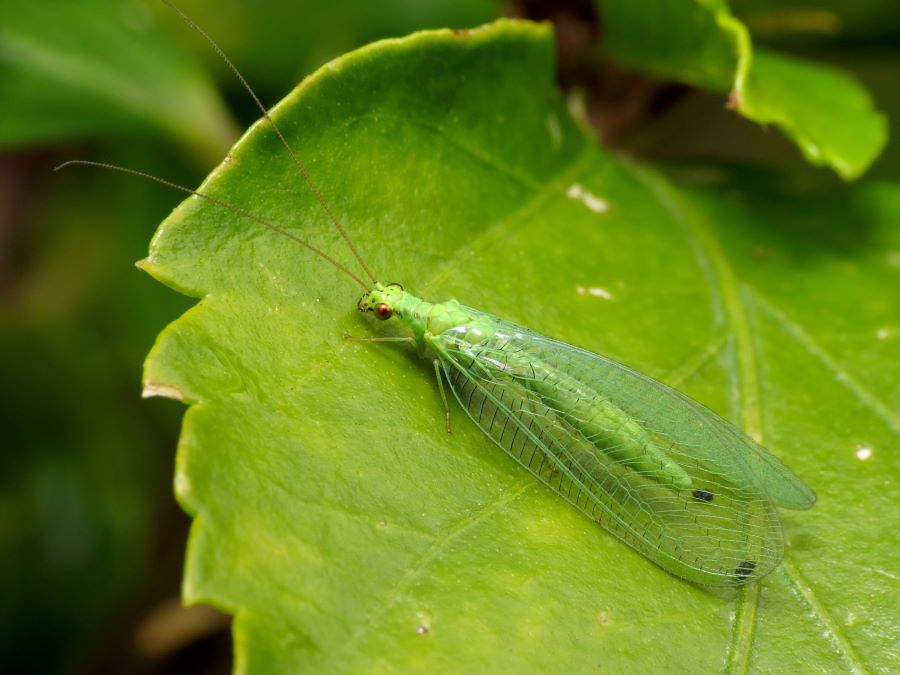
Let Beneficial Insects Work for You in Your Garden—Here’s All They Need From You
Just Stop Wearing Plastic Clothes